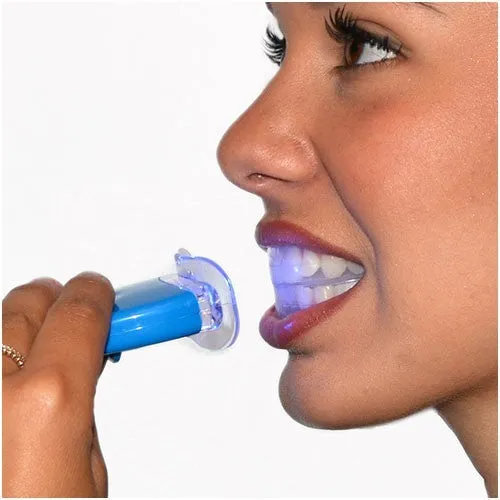
What is White Light LED Teeth Whitening
White Light LED teeth whitening is a popular cosmetic dental procedure designed to lighten the color of your teeth and remove stains and discoloration. This method utilizes a combination of a bleaching agent, usually hydrogen peroxide or carbamide peroxide, and an LED (light-emitting diode) light to accelerate the whitening process. The LED light activates the whitening gel, causing it to break down stains more quickly and effectively than traditional whitening methods. This procedure can be done at a dentist’s office or at home using a kit containing the whitening gel and an LED light device. The method has gained popularity due to its perceived efficiency and convenience, offering a brighter smile with relatively quick results, compared to other over-the-counter options. LED teeth whitening is considered to be generally safe when performed correctly, but it is essential to consult with a dental professional to determine the best whitening option for your specific needs and oral health condition.
How Does White Light LED Teeth Whitening Work
The process begins with the application of a whitening gel containing a peroxide-based bleaching agent onto the surface of the teeth. Following this, an LED light is used to activate the gel. The LED light emits a specific wavelength that reacts with the bleaching agent, speeding up the oxidation process. This oxidation breaks down the stain molecules, effectively lightening the teeth. This process is often repeated in multiple cycles during a single treatment session. At-home kits function similarly, however, the concentration of the bleaching agent and the intensity of the LED light may be lower compared to in-office treatments. These kits typically involve wearing a tray containing the whitening gel with the LED light for a prescribed amount of time, usually daily, over a period of several weeks. The effectiveness of the treatment depends on several factors, including the initial shade of the teeth, the type and severity of stains, and the concentration of the bleaching agent used. Always consult your dentist.
The Science Behind LED Technology

LED (Light Emitting Diode) technology utilizes semiconductors to emit light when an electric current passes through them. In teeth whitening applications, the LED light emits a specific wavelength of light that is designed to catalyze the whitening process. The light energy emitted by the LED light interacts with the whitening agent, generally hydrogen peroxide or carbamide peroxide. This interaction accelerates the breakdown of stain molecules on the tooth’s surface. The LED light itself does not directly whiten the teeth. It acts as a catalyst to speed up the chemical reaction of the whitening agent. The specific wavelength of the LED light is optimized to provide the most efficient activation of the whitening gel. The use of LED light in teeth whitening is considered safe and effective because it does not generate significant heat or emit harmful UV rays. This makes it a popular choice for both in-office and at-home teeth whitening treatments, offering patients a quick and comfortable way to brighten their smiles.
Benefits of LED Light
LED light offers several advantages in teeth whitening procedures. The primary benefit is its ability to accelerate the whitening process. The LED light enhances the effectiveness of the whitening gel, resulting in faster and more noticeable results compared to whitening methods without light activation. Furthermore, LED lights are known for producing minimal heat, reducing the risk of tooth sensitivity or discomfort during the treatment. This makes LED whitening a more comfortable option for individuals with sensitive teeth. LED lights do not emit harmful UV radiation, making them a safer choice for teeth whitening. LED lights are also energy-efficient and durable, contributing to the overall effectiveness and convenience of the teeth whitening process. The use of LED light ensures a brighter, whiter smile for patients with less time.
Fact 1 Immediate Whitening
One of the most appealing aspects of White Light LED teeth whitening is the potential for immediate results. Many individuals notice a significant improvement in the whiteness of their teeth after just one treatment session. In-office procedures, which often use stronger whitening agents and more powerful LED lights, can produce dramatic results in a single visit. At-home kits also offer immediate whitening effects, although the results are typically more gradual. While the degree of whitening varies depending on individual factors such as the initial shade of the teeth and the type of stains, most users experience a noticeable change after a few days of consistent use. The immediate whitening effect makes White Light LED teeth whitening an attractive option for those seeking a quick and effective solution to brighten their smile for special events or to boost their self-confidence.
Fact 2 Professional Results at Home

White Light LED teeth whitening kits enable individuals to achieve professional-grade results in the comfort of their homes. These kits often include a whitening gel with a concentration of bleaching agents similar to those used in dental offices and an LED light device. This combination allows users to experience significant whitening effects without the need for professional dental treatment. These home kits often have instructions that are easy to follow, making it simple for individuals to use them correctly. Although the whitening agents are often less concentrated than those used in professional treatments, consistent use of the kit can yield results comparable to those achieved at the dentist’s office. This offers a cost-effective and convenient alternative for individuals looking to enhance the brightness and appearance of their smiles without frequent dental visits. It is important to follow the kit’s instructions carefully to ensure safety and to maximize the effectiveness of the treatment.
Fact 3 Safe and Gentle
White Light LED teeth whitening is generally considered a safe and gentle procedure when performed correctly. The LED light used in the process does not emit harmful UV radiation, reducing the risk of potential side effects such as gum irritation or tooth sensitivity. The whitening gel used in both in-office and at-home treatments usually contains a peroxide-based bleaching agent, which, when used as directed, is safe for enamel. However, it is important to note that some individuals may experience mild tooth sensitivity or gum irritation as a temporary side effect. These effects are typically temporary and subside shortly after the treatment is completed. To ensure safety, it is crucial to follow the instructions provided by your dentist or the manufacturer of the at-home kit. For individuals with underlying dental issues or concerns about sensitivity, consulting with a dental professional is essential to determine the most suitable whitening method and to minimize potential risks.
Fact 4 Affordable Option
White Light LED teeth whitening offers a relatively affordable option for those seeking to enhance the brightness of their smiles. Compared to other cosmetic dental procedures, such as veneers or professional in-office whitening treatments, White Light LED teeth whitening is often less expensive. At-home kits are particularly cost-effective, allowing individuals to achieve noticeable results without the high costs associated with professional dental care. The affordability makes this method accessible to a wider range of people looking to improve their appearance and boost their self-confidence. While the cost varies based on the specific product or service and the number of treatments, White Light LED teeth whitening generally provides a good balance between effectiveness and price. The affordable nature of this whitening method makes it a popular choice for those on a budget who want a whiter, brighter smile.
Fact 5 Easy to Use

White Light LED teeth whitening is designed to be easy and convenient to use, whether in a dental office or at home. In-office procedures involve a simple application of the whitening gel and activation with the LED light, typically completed within a single session. At-home kits are equally straightforward and are designed to fit easily into your daily routine. The kits usually come with clear instructions and include all necessary components, such as the whitening gel, LED light device, and mouth trays. The process generally involves applying the gel to the teeth trays, inserting the trays into your mouth, and then activating the LED light for a specified duration. This ease of use makes White Light LED teeth whitening a popular choice for busy individuals who want a convenient and effective way to brighten their smile without the need for complex procedures or time-consuming appointments. Always follow instructions.
White Light LED Teeth Whitening Side Effects and Risks
While White Light LED teeth whitening is generally safe, it is important to be aware of potential side effects and risks. The most common side effect is temporary tooth sensitivity, which can occur after the treatment and typically subsides within a few days. Some individuals may also experience mild gum irritation. In rare cases, more serious complications such as allergic reactions or damage to the enamel might occur, especially if the treatment is not performed correctly or if the individual has pre-existing dental issues. Individuals with sensitive teeth, gum disease, or dental restorations should consult with a dentist before undergoing White Light LED teeth whitening to assess the suitability of the procedure. It’s also essential to follow the instructions provided by the dental professional or the at-home kit manufacturer to minimize potential risks and ensure the safe and effective use of the treatment. Regular dental check-ups before and after the procedure can help monitor oral health and address any issues promptly.